as business globalization and availability requirements increase, the implementation of domestic operation servers in singapore and multi-region disaster recovery solutions have become common options. this article provides executable suggestions around architecture design, compliance, network optimization, and operation and maintenance practices to help the technical team efficiently implement cross-region disaster recovery while ensuring reliability.
singapore has stable network interconnection and a mature cloud and computer room ecosystem. it is geographically close to key nodes in the asia-pacific and is suitable for overseas disaster recovery for domestic operation servers. choosing singapore can reduce cross-border latency and take advantage of regional connections, while also making it easier to deal with the risk of business interruption caused by regional failures.
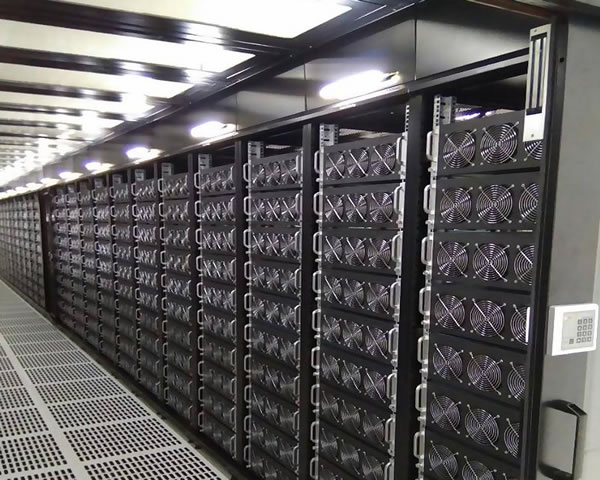
implementation needs to prioritize public network link redundancy, dedicated line access, and intelligent routing strategies, and combine cdn and edge acceleration to reduce user-perceived latency. qos and link monitoring are carried out on critical paths, and multiple network providers are used for mutual backup, which can achieve rapid switching and traffic stability when the network is abnormal.
cross-border transmission involves compliance and data protection requirements, and business classification, sensitive data scope and desensitization strategies need to be clarified. the design adopts minimized cross-border data transmission, encrypted transmission and access control, and cooperates with the legal compliance team to evaluate the implementation plan to ensure that regulatory and compliance requirements are met.
multi-region disaster recovery requires a trade-off between data consistency and recovery time objectives (rto/rpo). use synchronous or near-synchronous replication for core business, and use asynchronous replication and regular snapshots for non-critical data. bandwidth, latency, and consistency models need to be considered when designing a replication topology to ensure data availability after failover.
building a reliable fault detection and switching mechanism is the key to implementing disaster recovery. combined with health probes, heartbeat mechanisms and full-link monitoring, automatic determination and traffic switching are achieved; at the same time, manual approval paths are retained for complex scenarios to avoid the risk of unnecessary switching caused by misjudgment.
cross-region replication and synchronization increase bandwidth requirements, requiring traffic compression, incremental replication, and differential synchronization to reduce transmission volume. adopt hierarchical storage and hot and cold data separation strategies to synchronize key data on demand, architecturally control bandwidth pressure and improve overall efficiency to avoid resource waste.
operation and maintenance automation can improve disaster recovery response speed and reproducibility. it is recommended to establish a unified monitoring platform, alarm classification and automated script library, and achieve environmental consistency through infrastructure as code (iac). regular drills, logs and indicator management are the guarantee for continuous and stable operation.
regularly conduct multi-scenario drills to verify the effectiveness of the design, including partial area, network outage and data recovery drills. after the drill, deficiencies and improvement items were sorted out based on the sre process to form a closed-loop governance, and the process, recovery strategy and automation capabilities were gradually optimized to improve the overall anti-risk capability.
summary and suggestions: when promoting the implementation of domestic operation servers in singapore and multi-regional disaster recovery solutions, network reliability, data consistency, compliance requirements and automated operation and maintenance should be taken as core evaluation dimensions. through hierarchical strategies and continuous drills, combined with observability and automated switching mechanisms, controllable and reproducible disaster recovery capabilities can be achieved while ensuring business continuity.
- Latest articles
- Analysis Of The Advantages Of German Independent Servers In Cross-border Data Processing From The Perspective Of Regulatory Compliance
- A Practical Guide To Listing And Deploying Taiwan Cloud Server On Amazon
- Research On The Access Speed And Conversion Rate Of E-commerce Websites After Using Japanese Line CN2 Transfer
- Technical White Paper South Korea’s Large Bandwidth Server Rental Architecture And Bandwidth Control Strategy
- A Must-read For Beginners: Practical Methods For Optimizing Performance After Downloading And Installing Vietnam Zombie Servers
- Shanghai Japan Cloud Server Network Latency Test And Optimization Implementation Plan
- Korean Group Website Advertising Strategy, Local Platform Selection And Conversion Rate Improvement
- Network Interconnection And Routing Practice Of Hong Kong Cloud Server Cn2 In Multi-cloud Architecture
- From Logs To Traceability, Tracking And Analysis Methods After Tencent Cloud Hong Kong Server Was Attacked
- Stable And Cheap Malaysian Server For Live Video Broadcast. Key Points Of Delay And Jitter Control
- Popular tags
-

Best Practices And Techniques For Setting Up Don’t Starve Servers In Singapore
learn how to set up an efficient don't starve server in singapore, and explore best practices and techniques to make your gaming experience smoother. -

Things To Note And Suggestions When Choosing Singapore Cn2 Vps
when choosing cn2 vps singapore, learn about the considerations and recommendations to ensure you get the best service and performance. -

How To Optimize Network Performance Of Singapore Cn2 Direct Connection
this article discusses how to optimize the network performance of singapore's cn2 direct connection and provides effective methods and suggestions.